Jump to content
Wound management

Prevention and treatment of wound infections

People suffering from chronic wounds or complications from acute wounds are affected in many ways. Pain, anxiety and depression have been reported, as well as limitations due to dressing changes. Troublesome symptoms, such as wound secretion and odor, may lead to isolation. In some cases, individuals also face the financial burden of travel costs, sick leave and the cost of dressings and compression therapy.

Improve patients well being

Most chronic wounds are ulcers associated with ischemia, diabetes mellitus, venous stasis disease, or pressure. This poses a health problem with devastating consequences for patients’ quality of life.

INTERNATIONAL CONSENSUS DOCUMENT
Identifying and treating foot ulcers in patients with diabetes: saving feet, legs and lives

In this consensus document Sorbact is recommended for prevention, management and treatment of infection and bioburden in diabetic foot ulcers (DFU) and pressure ulcers (PU). Advantages of Sorbact include ”lack of bacterial resistance, its ability to attract antibiotic-resistant bacteria, non-allergenicity and no cytotoxicity”.

See tables 5, 6 and 7 in the article – For wound dressings to consider for standard PU care, DFU care and as potential therapies if not part of local standard (pages 32, 33 and 40). (Opens in new tab)

Let’s be honest, we’re too dependent on antibiotics

Antibiotics have transformed the work of medical professionals and saved millions of lives. However, we are now racing towards a post-antibiotic era where common infections and minor injuries could once again kill.

Time to rethink about infection management

A wound may be locally infected, with delayed wound healing as a result, even if there is no or only subtle signs of infection. It is therefore important to treat infections even before there are distinct signs that an infection has developed.

Save cost of chronic wounds

Chronic wounds account for approximately 2‒4 % of the healthcare budget.[1]View reference information Costs related to treatment, such as dressings, only stand for a minor part of the total cost.

Sorbact safely reduces the bioburden in wounds

Safe and effective removal of bacteria reduces the bioburden in wounds which facilitates the healing process. It is also shown that Sorbact exhibits high cell compatibility and does not change cell morphology. Moreover there is a minimized cell attachment to the dressing surface which increases safety toward tissues.

With the Sorbact mode of action, unlike certain antimicrobial substances that kill microbes, development of bacterial and fungal resistance is not expected, and it can be used for a prolonged period of time.

Proven to prevent and treat wound infection

Proven in more than 40 clinical studies and in publications including over 7,000 patients, Sorbact has more than 30 years of successful use in clinical practice. Today Sorbact is helping patients in over 65 countries around the world and we are continuing this important work by collecting clinical data.

Published study

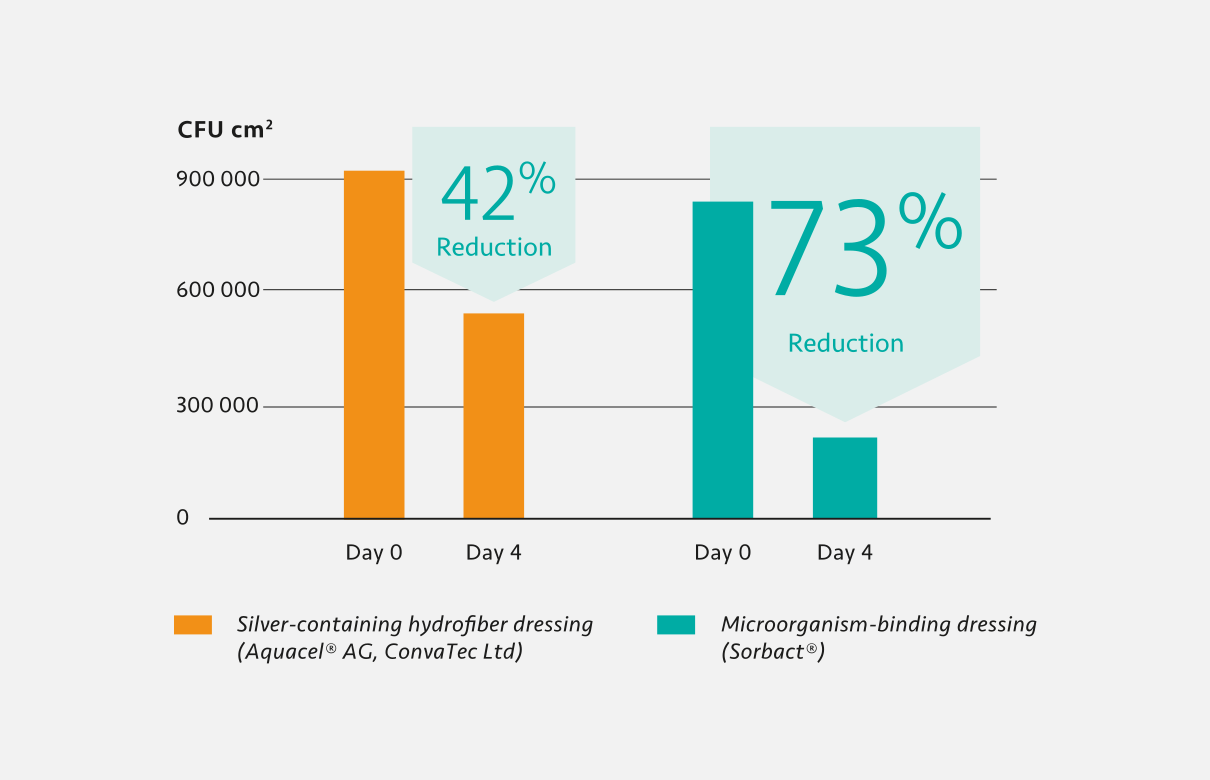
Sorbact outperforms silver in reducing bacterial load

A pilot RCT comparing Sorbact to a silver dressing in chronically infected or colonized venous leg ulcers. The results showed a significant reduction in bacterial load by day four of treatment.

Mosti G, Magliaro A, et al. 2015. Comparative study of two antimicrobial dressings in infected leg ulcers: a pilot study. Journal of Wound Care. 24(3):121-127. doi.org/10.12968/jowc.2015.24.3.121 (Opens in new tab)

Published study

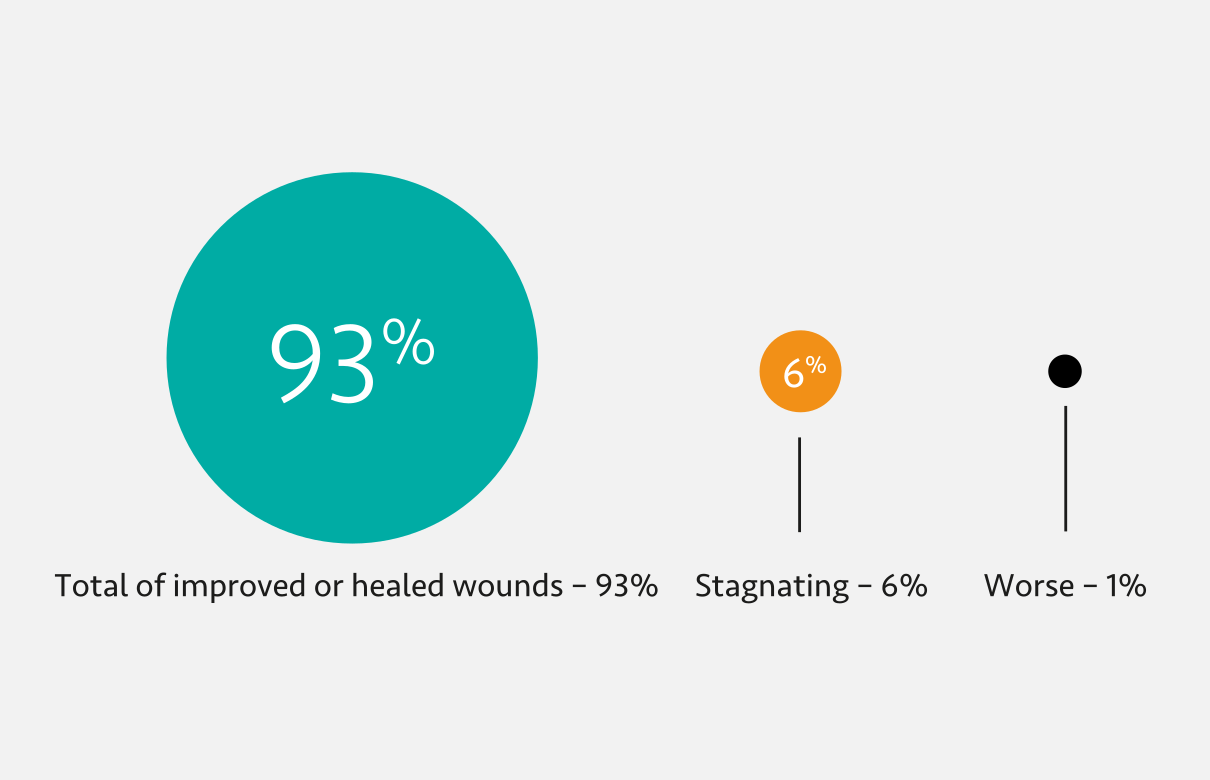
Sorbact effectively treats chronic wound infections

A European multicenter study involving 116 patients with infected or high risk of infection wounds demonstrates that 72 % of patients’ wounds were improved and 21 % were healed – a total of 93 % of the wounds were improved or healed using Sorbact.

Kammerlander G, Locher E, et al. 2008. An investigation of Cutimed Sorbact as an antimicrobial alternative in wound management. Wounds UK. 4(2):10-18. https://wounds-uk.com/journal-articles/an-investigation-of-cutimed-sorbact-as-an-antimicrobial-alternative-in-wound-management/ (Opens in new tab)

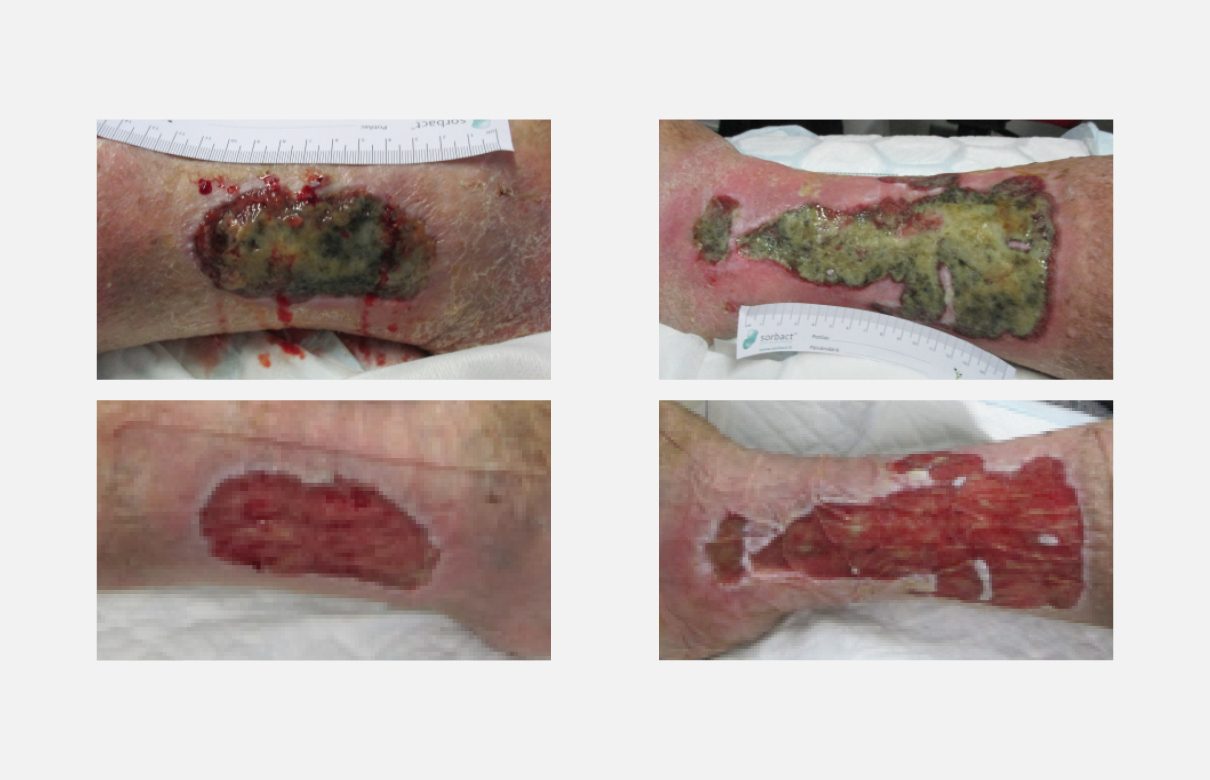
Case

Leg ulcer

An 89-year-old man suffering from hypertension with a long history of leg ulcers.

References

  1. Posnett J, Gottrup F, et al. 2009. The resource impact of wounds on healthcare providers in Europe. J Wound Care. 18(4):154-161.

    External link to reference1 (Opens in new tab) Back
  2. Romain B, Mielcarek M, et al. 2020. Dialkylcarbamoyl chloride-coated versus alginate dressings after pilonidal sinus excision: a randomized clinical trial (SORKYSA study). BJS Open. 4(2):225-231.

    External link to reference2 (Opens in new tab) Back
  3. Kammerlander G, Locher E, et al. 2008. An investigation of Cutimed Sorbact as an antimicrobial alternative in wound management. Wounds UK. 4(2):10-18.

    External link to reference3 (Opens in new tab) Back
  4. Kammerlander G, Locher E, et al. 2008. An investigation of Cutimed Sorbact as an antimicrobial alternative in wound management. Wounds UK. 4(2):10-18.

    External link to reference4 (Opens in new tab) Back
  5. Kammerlander G, Locher E, et al. 2008. An investigation of Cutimed Sorbact as an antimicrobial alternative in wound management. Wounds UK. 4(2):10-18.

    External link to reference5 (Opens in new tab) Back
  6. Bateman S. 2015. Evidence is building to support using a DACC-coated antimicrobial wound contact layer with NPWT. Wounds UK. 11(1):82-86.

    External link to reference6 (Opens in new tab) Back
  7. Haycocks S, Chadwick P. 2011. Use of DACC-coated dressings in diabetic foot ulcers: A case series. Diabetic Foot J. 14:133-137.

    External link to reference7 (Opens in new tab) Back
  8. Hampton S. 2007. An evaluation of the efficacy of Cutimed Sorbact in different types of non-healing wounds. Wounds UK. 3(4):113-119.

    External link to reference8 (Opens in new tab) Back